Is Your Toilet Posture Affecting Your Digestion What Most Australians Don’t Realise
Why Toilet Posture Deserves Attention
Most Australians focus on diet when talking about gut health: fibre, probiotics, hydration — and those are all important.
But there’s a quiet factor almost nobody talks about:
How we sit on the toilet.
Modern toilets encourage a chair-like sitting position. It feels normal… mostly because we’ve always done it.
Yet research increasingly shows that posture plays a big role in how efficiently — and comfortably — we go to the bathroom.
Ignoring posture may contribute to digestive discomfort without us realising why.
The Anatomy Lesson Nobody Gets Taught
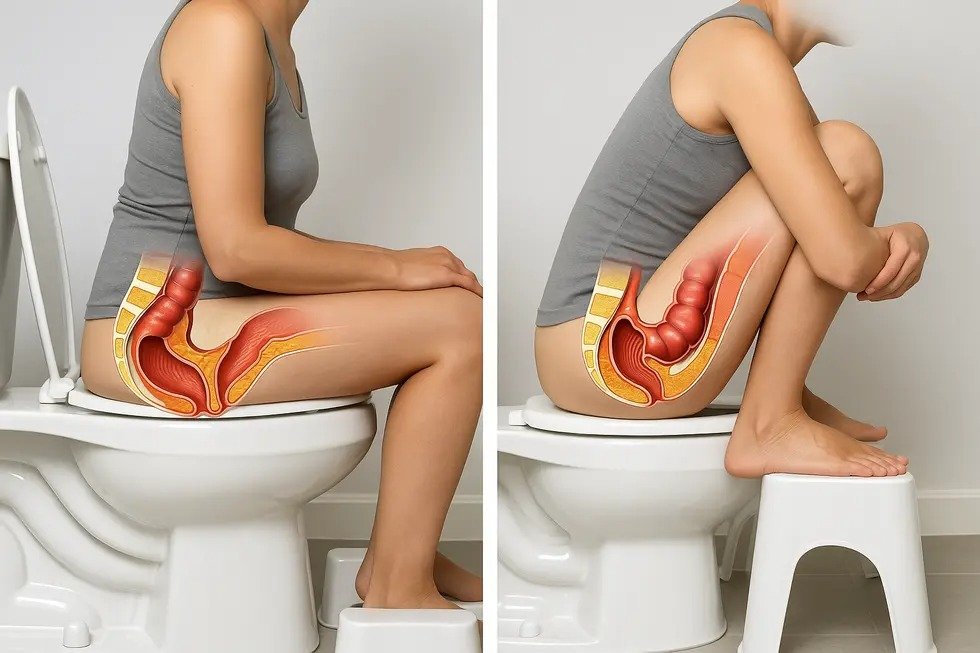
Inside the pelvis sits a small but powerful muscle called the puborectalis.
Think of it like a “safety kink” in a hose.
Its job is to maintain continence by pulling the rectum forward, creating a bend so stool doesn’t pass until we’re ready.
In a typical seated position, that bend doesn’t fully relax — meaning your body has to push harder.
That pushing becomes straining.
And straining, over time, isn’t harmless.
Sitting vs. Squatting What Changes in the Body
When you move into more of a squat-like posture — knees slightly higher than your hips — something important happens:
- The puborectalis relaxes more completely
- The rectal canal straightens
- Gravity works with the body instead of against it
This means:
Less effort
Less time on the toilet
A greater feeling of complete emptying
You don’t need to balance in a full squat. Simply raising the feet can help mimic the same anatomical advantage.
Everyday Gut Problems Linked to Straining
Poor toilet posture doesn’t cause every digestive issue — but it can make many of them worse, including:
- Constipation
- Hemorrhoids
- Bloating
- Pelvic floor tension
- That frustrating “not finished” feeling
Australians often assume the answer is always laxatives, supplements, or drastic diet changes.
Sometimes, the solution starts with posture.
How Toilet Stools Help — And Why Squatty Potty Australia Stands Out
Toilet stools were designed to make posture easier and safer without changing your bathroom setup.
Placed in front of the toilet, they gently lift the feet, guiding the body into a more natural position. No strain. No awkward balancing.
One brand many people recognise is Squatty Potty Australia.
Their stools are popular because they’re:
- Ergonomically shaped for posture alignment
- Stable and sturdy underfoot
- Designed to tuck neatly around most toilets
- Available in styles that blend into modern bathrooms
Rather than being a fad, they’ve helped normalise the conversation:
toilet posture isn’t weird — it’s simply smart digestive ergonomics.
(As always, if you have medical conditions or ongoing symptoms, it’s wise to discuss posture changes with a health professional.)
Simple Habits to Support Better Digestion
Posture is powerful, but gut health works best with a few consistent habits:
- Drink enough water daily — dehydration hardens stool.
- Get fibre from real food — fruits, vegetables, legumes, whole grains.
- Move your body — walking stimulates bowel movement.
- Respond to the urge — delaying can worsen constipation.
- Relax on the toilet — don’t rush and don’t strain.
Combine these with supportive posture and you may notice smoother, more comfortable bathroom visits.
Final Takeaway
Toilet posture probably wasn’t something you were ever taught — yet it influences digestion more than many people realise.
By simply adjusting how we sit — and using supportive tools such as those from Squatty Potty Australia — we work with our body’s natural design rather than fighting against it.
Disclaimer
This article is for informational and educational purposes only and is not intended as medical advice. The content does not replace professional diagnosis, treatment, or guidance from a qualified healthcare provider. Digestive health conditions vary from person to person, and what works for one individual may not be appropriate for another. Always consult a GP, gastroenterologist, pelvic health physiotherapist, or other qualified health professional before making changes to your bowel habits, posture, or using assistive devices—especially if you have ongoing symptoms, chronic conditions, pain, or a diagnosed medical issue. Any product references are mentioned for general awareness and do not constitute medical endorsement.